
In mid-November 2025, the first major winter rains swept across the Gaza Strip, bringing devastation to a civilian population already pushed to the brink by war, displacement, and deprivation. For hundreds of thousands of Palestinians now living in fragile tent camps, a simple downpour has become a life-threatening situation. The rain floods, soaks, and sweeps away what little remains of dignity, warmth, and safety.
With two million residents in Gaza, the vast majority have been displaced at least once since the conflict escalated, and many now live in overcrowded tent settlements in areas like Al-Mawasi, Deir al-Balah, Khan Younis, and Rafah. These makeshift shelters, which are often nothing more than thin plastic sheets stretched over flimsy frames, are no match for winter storms. “We have been flooded by the rain, us and our little children,” Raed Al-Alayan said. “Our tents were flooded. There is no roof to protect us from the rain.” When the rain came down in November, floodwaters rose 40-50 cm in camp zones, collapsing tents, drowning bedding, and ruining precious food, clothing, and personal documents in a matter of hours.
A Shelter That Leaks Is No Shelter at All
It has been raining in the UK for the past week, and there was even a storm two weeks ago across the country. As I watched the rain fall outside my window while I was warm, dry, and safe inside, I had to pause and reflect. I realised I’ve taken something as basic as a solid roof over my head for granted while the people of Gaza are sleeping on soaked mattresses, with rain dripping through their tent roof, pooling under their children, and soaking the only blanket they own.
The tents scattered around the coastal sands and barren fields offer little more than symbolic cover. Made of tarpaulin or cheap plastic, they leak from every gap during heavy downpours.
The situation is made worse by geography and infrastructure. Many tent camps were erected on sandy or low ground with no drainage systems. In some areas, the ground is so saturated that even moderate rainfall turns pathways into rivers of mud.
“This winter rain is a blessing from God, but there are families who no longer wish for it to fall, fearing for the lives of their children and their own survival”
Asaliyah, a Palestinian man, told Al Jazeera.
The Human Cost of a Soaked Winter
Flooding in Gaza’s displacement camps has turned already dire conditions into a public health emergency. Rainwater pools in open trenches and torn tents, mixing with sewage and debris. These stagnant puddles breed bacteria and insects, accelerating the spread of disease in spaces where hygiene is nearly impossible.
Each drop of rain adds to the burden. Wet clothing and bedding cling to skin, driving down body temperature. Fever spreads quickly in cramped, poorly ventilated tents. One sick child can soon become ten. A single case of waterborne illness can spiral into an outbreak.
The cold does not attack alone. It works with hunger, exhaustion, and trauma to break down the human body. Every day without shelter, warmth, or clean water pushes families closer to the edge.
A Race Against Winter: Urgent Needs on the Ground
As winter arrives, the situation will only worsen. Forecasters predict more intense rainfall in the coming weeks, and temperatures are dropping steadily. Without adequate intervention, the death toll from exposure and illness could rival casualties from direct conflict.
The most urgent needs include:
- Winterised tents with water-resistant fabric and insulated flooring
- Waterproof tarpaulins and plastic sheeting to reinforce existing shelters
- Insulated ground mats to prevent heat loss through wet sand
- Warm blankets, children’s winter clothing, and safe heating solutions
- Clean water, hygiene kits, and food parcels to replace supplies destroyed by flooding
But delivering aid remains a logistical nightmare. The October 10 ceasefire has let more aid reach Gaza, but the UN and humanitarian groups say Palestinians still don’t have enough food, medicine, shelter, or other essentials. Even when donations arrive, distribution is hampered by the very conditions the aid aims to address: flooded roads, collapsed infrastructure, and chaotic camp layouts.
Why This Moment Demands Our Attention
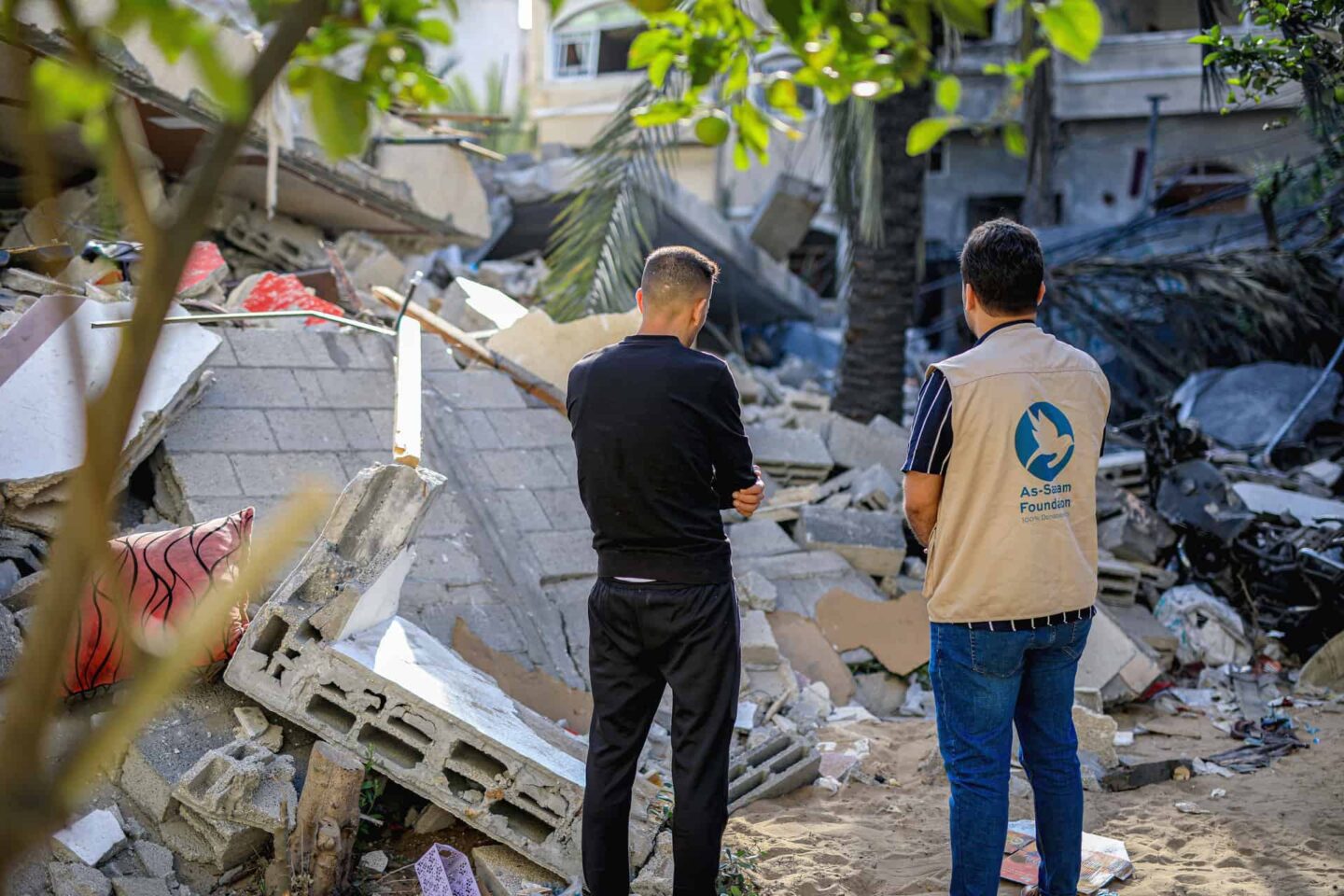
For many, winter means shelter, warmth, and safety. For Palestinians in Gaza, it means exposure, sickness, and deeper suffering. Homes reduced to rubble offer no protection from the cold. Tents, soaked by rain and torn by wind, become traps of damp and illness. Families huddle together, not for comfort but survival, their children shivering under thin fabric and mud-stained sheets.
Floodwater fills makeshift camps, carrying disease. Respiratory infections spread fast in overcrowded shelters. Clean water is scarce. A warm meal, a dry blanket, a tent raised above the floodline are not comforts; they are what stands between life and death.
This winter is not just cold. It is a test of our humanity. Thousands have nowhere to go. They have no heating, no insulation, no roofs. What little aid reaches them is overwhelmed by need. Every hour without support deepens the crisis.
We cannot wait for headlines to change. We cannot wait for access to improve. We act now because survival cannot wait.
How You Can Help
Aid entering Gaza remains restricted. Despite this, our commitment has not wavered. Right now, we are delivering water, flour, cooked meals, bread, clothing, tents, and blankets: items that have become scarce but are essential for survival. A single sack of flour feeds a family for days. A container of clean water stops disease from spreading. A warm blanket or a tent becomes a home for those who lost everything.
Families are on the move, fleeing violence, with little more than the clothes on their backs. They need shelter. They need food. They need clean water. Your donation buys flour, fuels bread ovens, fills water tanks, and packs meals. It puts blankets into freezing nights and tents over displaced heads.
Now is the time to act. A winter tent shields a family from rain and wind. Blankets hold body heat when nights drop below freezing. Clean water stops cholera before it starts. Bread and flour restore strength. These are not minor gifts. They are lifelines.
👉 Donate now to As-Salaam Foundation’s Gaza Emergency Appeal. Your support brings water, food, warmth, and shelter to those who have nothing.